What Should You Do When A Cold Plunge Struggles To Stay Cold During Summer Heat?
High ambient temperatures push a chiller harder than any other condition, and most summer complaints trace back to shade, insulation and airflow rather than a failing compressor. Here is how to diagnose and fix warm water in July.
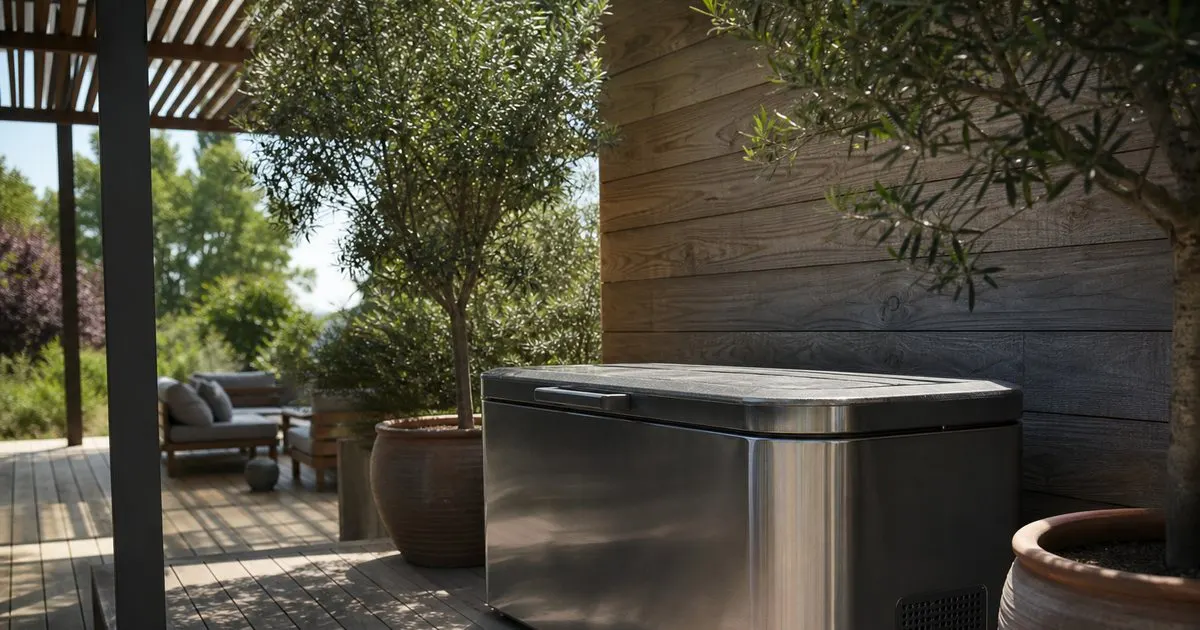
Understand what summer is actually doing to your water
A chiller does not make cold so much as it removes heat, and in summer it has far more heat to remove. Warm air transfers energy through the shell and the lid, direct sun loads the surface and any exposed panel, hot decking radiates upward into the base, and every body that enters carries its own warmth into the water. On top of that, the condenser is trying to reject heat into air that is already hot, which reduces the amount of work the same compressor can do. The result is a unit that held a target temperature effortlessly in April and now runs far longer each day to hold a couple of degrees higher. Related: What Should You Know About Chilling Systems In A Premium Cold Plunge?
This is normal physics rather than a defect, and knowing that changes the diagnosis. Manufacturers rate cooling capacity at an assumed ambient temperature, and performance falls away as the surrounding air climbs above it. If your water has drifted upward by a small margin during a heat wave but the unit is running, cycling and holding steady, you are seeing the system work at the edge of its envelope. If the water climbs steadily day after day, never recovers overnight when the air is coolest, or the chiller runs continuously without ever satisfying the setpoint, that is a different conversation and worth a service call.
Keep reading: How Do You Choose A Luxury Cold Plunge For Home Wellness Use?, What Should You Know About Chilling Systems In A Premium Cold Plunge?, How Much Does A High End Home Cold Plunge Actually Cost To Own?. See how Coldplungr helps you the wellness guide to premium cold plunges and ice baths.
Shade and insulation buy you more than a bigger chiller would
The most effective summer upgrades are passive. A well fitted insulated cover, closed whenever the plunge is not in use, is the single biggest lever most owners have, because an open surface in direct sun absorbs heat continuously and evaporates water that has to be replaced with warm supply. Shade over the tub matters almost as much, whether that is a pergola, a sail, a mature tree or simply a placement decision made at install time. Owners who sited a plunge for morning light without considering the afternoon often find that relocating it a few feet, or building shade above it, does more for July performance than any setting change. Related: Which Filtration And Sanitation Features Keep A Luxury Ice Bath Truly Clean?
Look at what the plunge sits on as well. Dark composite decking, stone and concrete store a remarkable amount of heat through the afternoon and release it into the base of the tub well into the evening. A light colored pad, an insulating base, or a few inches of air beneath the unit all reduce that transfer. Check the lid itself while you are at it, since a hinged cover that has taken a season of sun may no longer seal along one edge, and a compressed or waterlogged foam core insulates far less than it did new. Replacing a tired cover is unglamorous and frequently the fix.
Give the condenser clean, moving, genuinely outside air
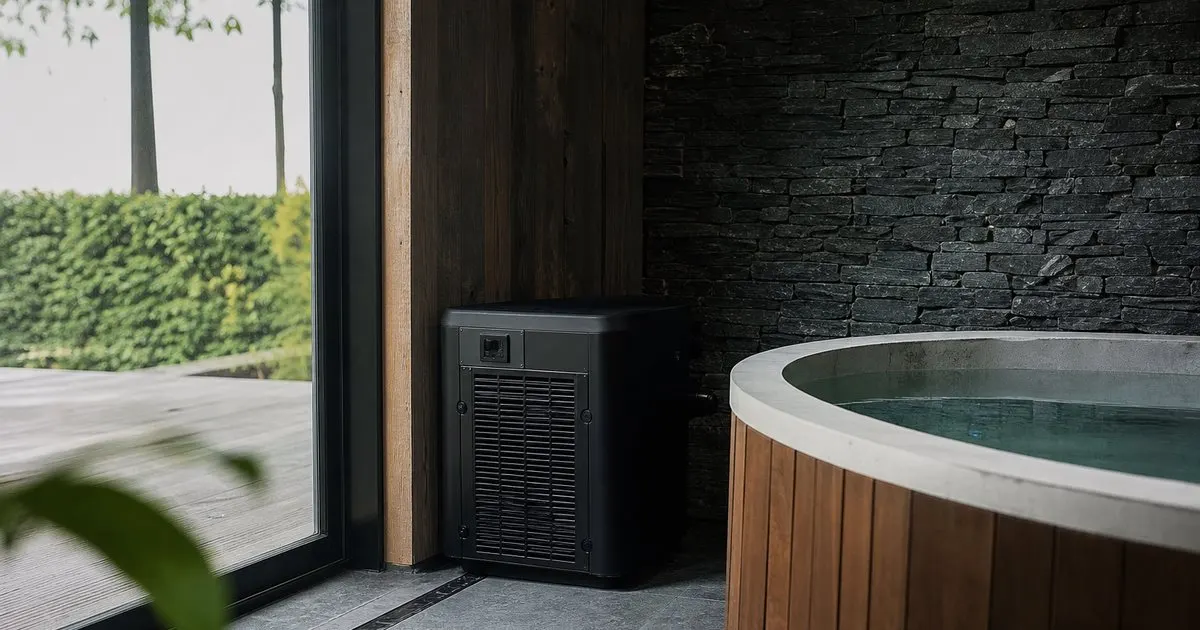
A chiller rejects heat through a finned coil and a fan, and in summer that assembly needs room to breathe. Every manufacturer specifies minimum clearances around the unit, and those numbers exist because a chiller tucked into a corner, pressed against a fence or hidden inside a closed cabinet ends up drawing in the hot air it just exhausted. That recirculation loop can raise the effective ambient temperature well beyond what the outdoor thermometer says and it degrades performance quickly. If you built an enclosure for appearance, make sure it has generous, unobstructed openings on the intake and exhaust sides rather than decorative slats that look open but are not.
Clean the coil at least once during the season, more often if you live near cottonwood, pines or a busy road. Fins clogged with pollen, dust, grass clippings or pet hair behave exactly like a blocked radiator, and a gentle rinse or a soft brush with the unit powered off can restore a surprising amount of capacity. Where the chiller is a separate box connected by lines to the tub, keep it in shade even if the tub itself sits in the sun, and check that the lines are insulated and undamaged along their whole run. Line insulation that has cracked, slipped or been chewed is a quiet source of lost capacity that nobody thinks to inspect.
Adjust the practice and the water care instead of fighting the season
Small changes in how you use the plunge make the equipment's job easier. Plunging in the early morning, when the water is at its coldest after a night of low ambient temperature, gives you the best session of the day for free. Spacing several household sessions apart lets the chiller recover between them rather than chasing a full tub of warmed water. Accepting a slightly higher setpoint through the hottest weeks is also a legitimate choice, since a modest difference in temperature changes the experience less than most people expect and spares the compressor from running near continuously for a month. Related: How Much Does A High End Home Cold Plunge Actually Cost To Own?
Warm weather also changes water chemistry. Sanitizer is consumed faster at higher temperatures, filters load up more quickly with sunscreen, pollen and sweat, and biological growth that was never an issue in winter becomes plausible in a warm, sunlit tub. Test more often than you do in cool months, rinse or replace filters on a shorter interval, and top off water lost to evaporation before the level drops far enough to affect circulation. If you go away for a week in August, either arrange for someone to check the unit or follow the manufacturer's guidance on shutdown and drainage, because a stagnant plunge in high summer deteriorates far faster than one left in October. Related: How Much Noise Does A High End Cold Plunge Chiller Really Make?
- Warmer water in a heat wave is usually the chiller working at the edge of its rated ambient range, not a failure.
- An intact insulated cover, overhead shade and an insulating base do more for summer performance than any setting change.
- Respect clearance specs and clean the condenser coil, since recirculated hot air and clogged fins destroy capacity.
- Plunge early, space household sessions, and step up sanitizer testing and filter cleaning through the hottest weeks.

Julien Jimenez
Julien Jimenez is an independent software builder based in Paris. He designs, ships, and operates focused SaaS products for small businesses and independent professionals. Read the full author page.
Cold Water, Considered Well
The wellness guide to premium cold plunges and ice baths. Coldplungr is built to help you put this into practice.
Compare plungesMore from the Coldplungr blog
How Do You Choose A Luxury Cold Plunge For Home Wellness Use?
What Should You Know About Chilling Systems In A Premium Cold Plunge?

How Much Does A High End Home Cold Plunge Actually Cost To Own?
Get the complete cold plunges and ice baths guide
Our full buying guide, the price guide, and new research as we publish it. One email, no spam, unsubscribe any time.