How Do You Plan The Electrical Work A Luxury Cold Plunge Will Need Before Installation Day?
A premium plunge is an appliance that runs a refrigeration circuit every day, and the wiring behind it decides whether ownership is quiet and uneventful. Here is how to scope circuits, panel capacity and outdoor protection before the crate arrives.
Start from the circuit the unit actually asks for, not the outlet you happen to have
Every serious plunge publishes an electrical specification, and it is the first page of the manual worth reading before you buy. Most self contained units in the premium tier run on a standard 120 volt supply and ask for a dedicated 15 or 20 amp circuit, while larger chillers, faster recovery models and some remote systems call for 240 volts on their own breaker. The word that matters in all of those specs is dedicated. A refrigeration compressor draws a brief inrush of current every time it starts, and sharing that circuit with a garage freezer, a treadmill or a bank of shop lights is how you end up with a breaker that trips at random and water that is warmer than it should be by morning. Related: What Should You Know About Chilling Systems In A Premium Cold Plunge?
Read the spec as a set of three numbers rather than one: voltage, breaker size and the required receptacle configuration. A unit rated for 240 volts will name a specific plug type, and the receptacle your electrician installs has to match it exactly. Note the running amperage as well as any listed maximum draw, because the running figure tells you how much of the circuit the plunge consumes in normal operation and the maximum tells your electrician what the circuit has to tolerate on a hot afternoon when the compressor is working hardest. If a manufacturer will not give you those numbers before purchase, treat that as information in itself.
Keep reading: How Do You Choose A Luxury Cold Plunge For Home Wellness Use?, What Should You Know About Chilling Systems In A Premium Cold Plunge?, How Much Does A High End Home Cold Plunge Actually Cost To Own?. See how Coldplungr helps you the wellness guide to premium cold plunges and ice baths.
Get your panel and the cable route assessed while the plunge is still a plan
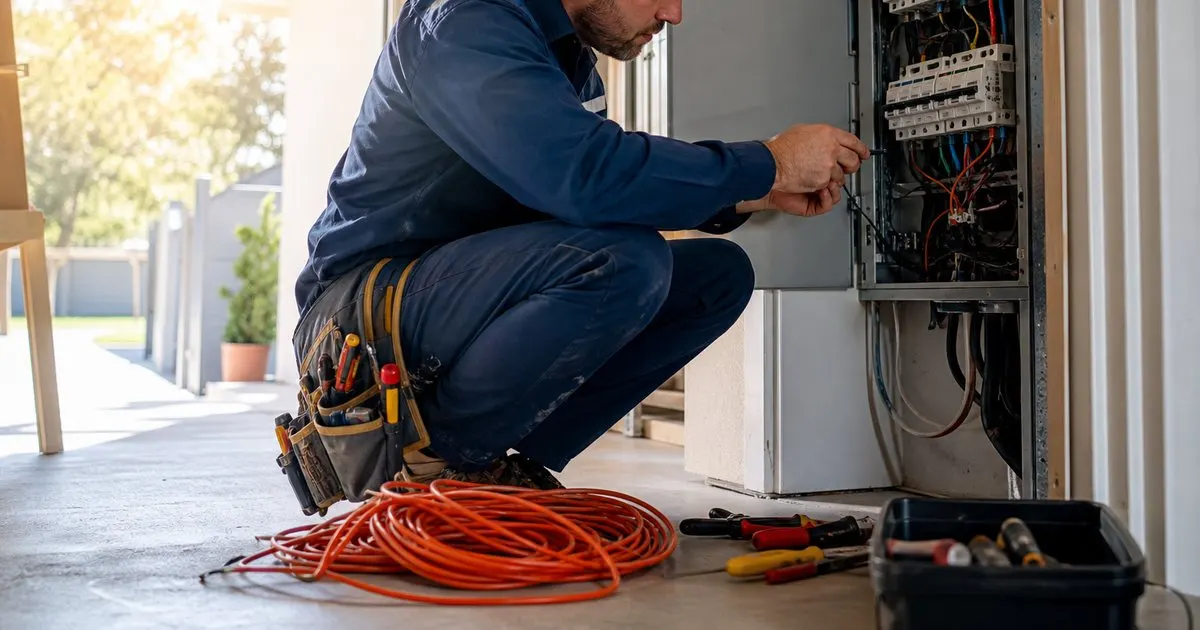
The real cost of a plunge install is rarely the outlet itself. It is the distance between your electrical panel and the spot where the tub will sit, and the obstacles in between. A licensed electrician can tell you in a single site visit whether your panel has a free breaker space, whether the existing service has capacity left once your air conditioning, heat pump or electric range are accounted for, and how the cable would actually travel to the terrace, the basement corner or the far end of the garden. Long runs need heavier conductors to keep voltage drop within acceptable limits, and that is a wiring detail that quietly protects the compressor over years of daily cycling. Related: Which Filtration And Sanitation Features Keep A Luxury Ice Bath Truly Clean?
Book that assessment before you place the order, not after the freight company calls. Homeowners who wait often discover that a full panel, an older service or a buried run under a finished patio turns a simple job into a multi week project, and the plunge sits crated in the garage in the meantime. Ask the electrician for a written scope that names the breaker size, the cable type and length, the receptacle location and whether a permit and inspection are required in your jurisdiction. Many municipalities do require both for a new outdoor circuit, and an inspected install is also the version your insurer and any future buyer will want to see. Related: Where Should You Place A Cold Plunge Indoors Or In Your Garden?
Outdoor placement raises the standard for protection and hardware
Water and electricity meet at a plunge by design, so ground fault protection is not optional. Circuits serving an outdoor plunge are normally required to be GFCI protected, either through a GFCI breaker at the panel or a protected receptacle, and many owners prefer the breaker because it keeps the sensitive device dry and easy to reset indoors. Outdoor receptacles need a weather resistant device and an in use cover, the deep bubble style that closes over a plug while the unit is running rather than the flat flap that only seals an empty outlet. Mount it high enough to stay clear of splash, runoff and the puddle that forms where people step out. Related: How Much Does A High End Home Cold Plunge Actually Cost To Own?
Ask your electrician about the details that separate a compliant install from an improvised one: conduit rated for the location and buried at the depth your code requires, a means of disconnect where the equipment calls for it, correct bonding of nearby metal, and drainage that keeps standing water away from the base of the unit and its cord entry. If the plunge sits on a deck, the same conversation covers how the cable passes through framing and how it is protected from string trimmers, snow shovels and curious pets. None of this is exotic work for a professional, but it is work that has to be specified rather than assumed.
Avoid the shortcuts that cause most of the service calls
The single most common mistake in this category is the extension cord. Even a heavy gauge cord introduces resistance and a connection point that can loosen, corrode or sit in a puddle, and most manufacturers explicitly void warranty coverage on compressor failures traced to one. The second most common mistake is a shared circuit, where the plunge coexists with something else that cycles on its own schedule. Both problems present the same way to the owner: intermittent shutdowns, a chiller that seems to lose ground overnight, and a fault that never reproduces while a technician is standing there.
Build in a few habits that make faults legible. Label the breaker clearly at the panel so nobody switches it off during unrelated work and leaves the water to warm for a week. Note where the GFCI reset lives and check it whenever the water is unexpectedly high, since a tripped ground fault device is by far the most likely explanation and often the only one. If your area sees voltage sags during summer demand peaks, ask your electrician whether surge protection at the panel makes sense for your service. And when a GFCI trips repeatedly rather than once after a storm, stop resetting it and call for service, because a device that keeps tripping is usually reporting a real fault in the equipment or the wiring rather than misbehaving.
- Read the unit's electrical spec before ordering and treat the word dedicated as a requirement, not a suggestion.
- Have a licensed electrician assess panel capacity and the cable route while the purchase is still reversible.
- Outdoor circuits need GFCI protection, a weather resistant receptacle and an in use cover, plus conduit and drainage done properly.
- Never run a plunge on an extension cord or a shared circuit, and treat repeated GFCI trips as a service call.

Julien Jimenez
Julien Jimenez is an independent software builder based in Paris. He designs, ships, and operates focused SaaS products for small businesses and independent professionals. Read the full author page.
Cold Water, Considered Well
The wellness guide to premium cold plunges and ice baths. Coldplungr is built to help you put this into practice.
Compare plungesMore from the Coldplungr blog

How Do You Choose A Luxury Cold Plunge For Home Wellness Use?
What Should You Know About Chilling Systems In A Premium Cold Plunge?

How Much Does A High End Home Cold Plunge Actually Cost To Own?
Get the complete cold plunges and ice baths guide
Our full buying guide, the price guide, and new research as we publish it. One email, no spam, unsubscribe any time.