How Much Noise Does A High End Cold Plunge Chiller Really Make?
Compressor hum, fan noise, and pump vibration are the sounds most brochures leave out. Here is what to expect, why some units are quieter, and how to place a chiller so it disappears.
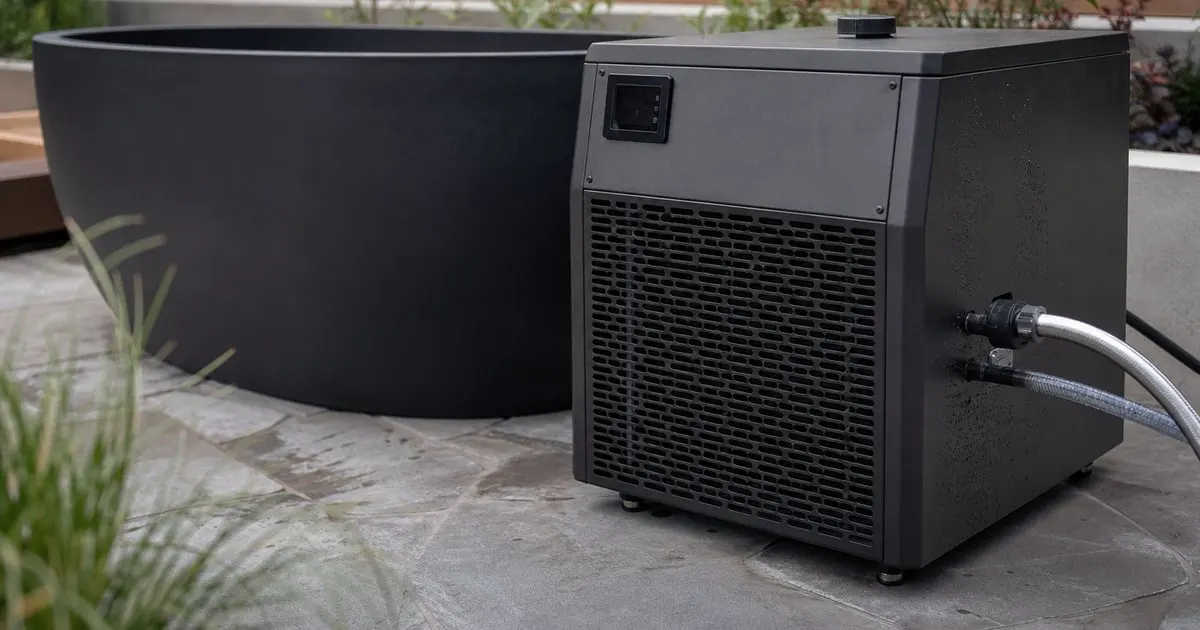
Where the noise comes from
A cold plunge chiller is a small refrigeration system, and it makes the same family of sounds as a refrigerator or a window air conditioner: a compressor hum, the whoosh of a condenser fan pushing air across the coil, and the softer tone of a circulation pump. On a well-built unit the compressor and fan dominate, and they only run while the system is actively pulling heat out of the water. Once the target temperature is reached, a quality chiller cycles on and off, so the sound is intermittent rather than constant. Related: How Do You Choose A Luxury Cold Plunge For Home Wellness Use?
The pump is usually the sound you hear most often, because it runs continuously on many systems to keep water moving through the filter and sanitizer. Pumps are quiet when they are well mounted and loud when they vibrate against a hard surface or when air is trapped in the line. A gurgling or rattling pump is almost always an installation issue rather than a design flaw, and it is worth fixing on day one since the noise carries through decking and walls. Related: Which Filtration And Sanitation Features Keep A Luxury Ice Bath Truly Clean?
Keep reading: How Do You Choose A Luxury Cold Plunge For Home Wellness Use?, What Should You Know About Chilling Systems In A Premium Cold Plunge?, How Much Does A High End Home Cold Plunge Actually Cost To Own?. See how Coldplungr helps you the wellness guide to premium cold plunges and ice baths.
Why some premium chillers are noticeably quieter
Manufacturers rarely publish sound measurements in a way that allows honest comparison, and the numbers that do appear are measured under conditions you cannot verify. What separates a quiet chiller from a loud one in practice is engineering choices you can inspect: a larger, slower fan moves the same air with less noise than a small fast one, rubber isolation mounts under the compressor cut vibration, and an insulated enclosure softens the sharp edges of the sound. Variable speed compressors, where offered, tend to hum at a lower level for longer rather than cycling hard.
Sizing matters as well. A chiller that is generously rated for the volume of water reaches temperature quickly and then rests, while an undersized unit runs nearly all the time and never seems to stop. Insulation on the tub and a fitted cover reduce the workload further, which means fewer run hours and a quieter backyard. When comparing models, ask the retailer for a video of the unit running, and listen for rattles rather than trusting a decibel figure on a spec page. Related: What Should You Know About Chilling Systems In A Premium Cold Plunge?
Placement strategies that make the chiller disappear
Distance and barriers do most of the work. Integrated chillers give you the least control, since the compressor sits inside the frame near where you are sitting; external chillers can be moved several feet away on longer hoses, tucked behind a low wall, or set on the far side of a planter. Avoid placing the unit in a corner formed by two hard walls, which reflects and amplifies sound, and give it the airflow clearance the manual specifies so the fan does not have to work harder than necessary.
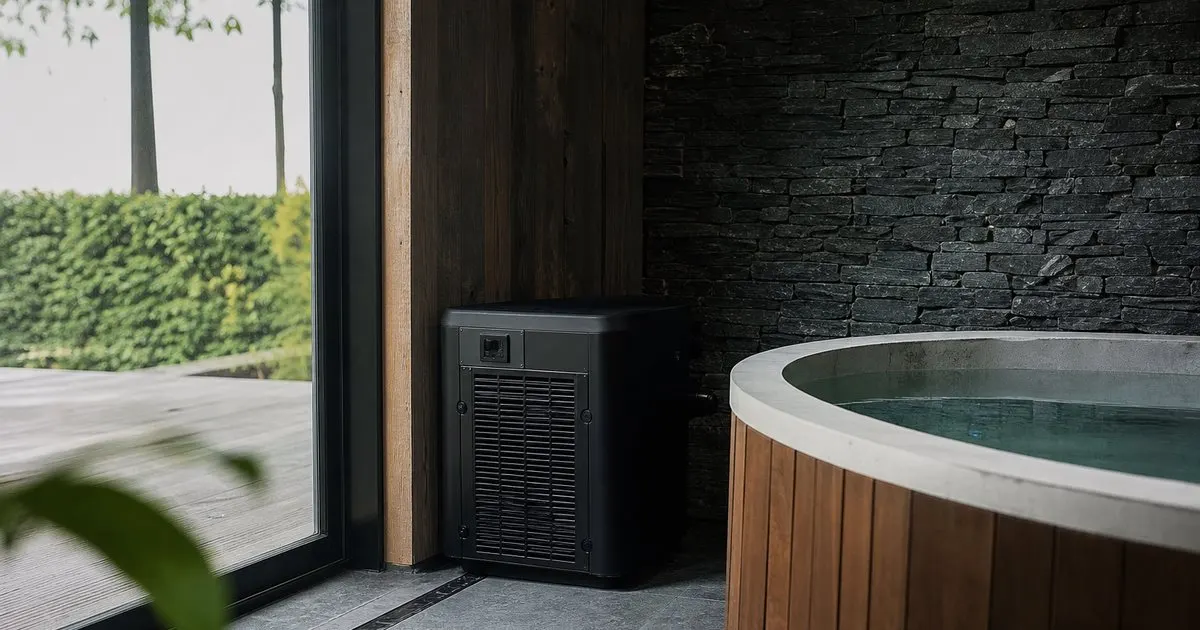
Indoors, the chiller belongs on a rubber mat or isolation pads, never bolted directly to a wood floor, and ideally in a utility space rather than the room where you plunge. Some owners route hoses through a wall so the chiller lives in a garage or mechanical closet, which is the quietest configuration by a wide margin. Whatever you do, keep the unit out of enclosed cabinets without ventilation, since heat buildup shortens the life of the compressor and pushes the fan to full speed. Related: Where Should You Place A Cold Plunge Indoors Or In Your Garden?
Living with the sound, and when to worry
For most owners the realistic experience is a low hum when the chiller cycles, easily masked by conversation and rarely audible from inside the house through a closed window. Neighbors are seldom affected when the unit is placed thoughtfully, though in dense urban settings it is courteous to check local noise rules and avoid running the chiller at full tilt late at night; scheduling features on many controllers make this easy.
New noises are the ones to notice. A grinding sound, a fan that rattles at startup, a compressor that clicks on and off in rapid succession, or a pump that suddenly becomes loud usually points to a blocked coil, low refrigerant, a failing bearing, or air in the line. These are warranty matters if the unit is young, so record a short video and contact the seller promptly. A well-made chiller, kept clean and given room to breathe, should sound the same in year five as it did on day one.
- Expect refrigerator or window air conditioner style sound that cycles rather than runs constantly.
- Larger fans, isolation mounts, and adequate sizing are what make premium chillers quieter.
- External chillers can be moved behind barriers or into a garage for near silent plunging.
- New grinding, rattling, or rapid cycling sounds are signals to contact the seller.

Julien Jimenez
Julien Jimenez is an independent software builder based in Paris. He designs, ships, and operates focused SaaS products for small businesses and independent professionals. Read the full author page.
Cold Water, Considered Well
The wellness guide to premium cold plunges and ice baths. Coldplungr is built to help you put this into practice.
Compare plungesMore from the Coldplungr blog

How Do You Choose A Luxury Cold Plunge For Home Wellness Use?
What Should You Know About Chilling Systems In A Premium Cold Plunge?

How Much Does A High End Home Cold Plunge Actually Cost To Own?
Get the complete cold plunges and ice baths guide
Our full buying guide, the price guide, and new research as we publish it. One email, no spam, unsubscribe any time.